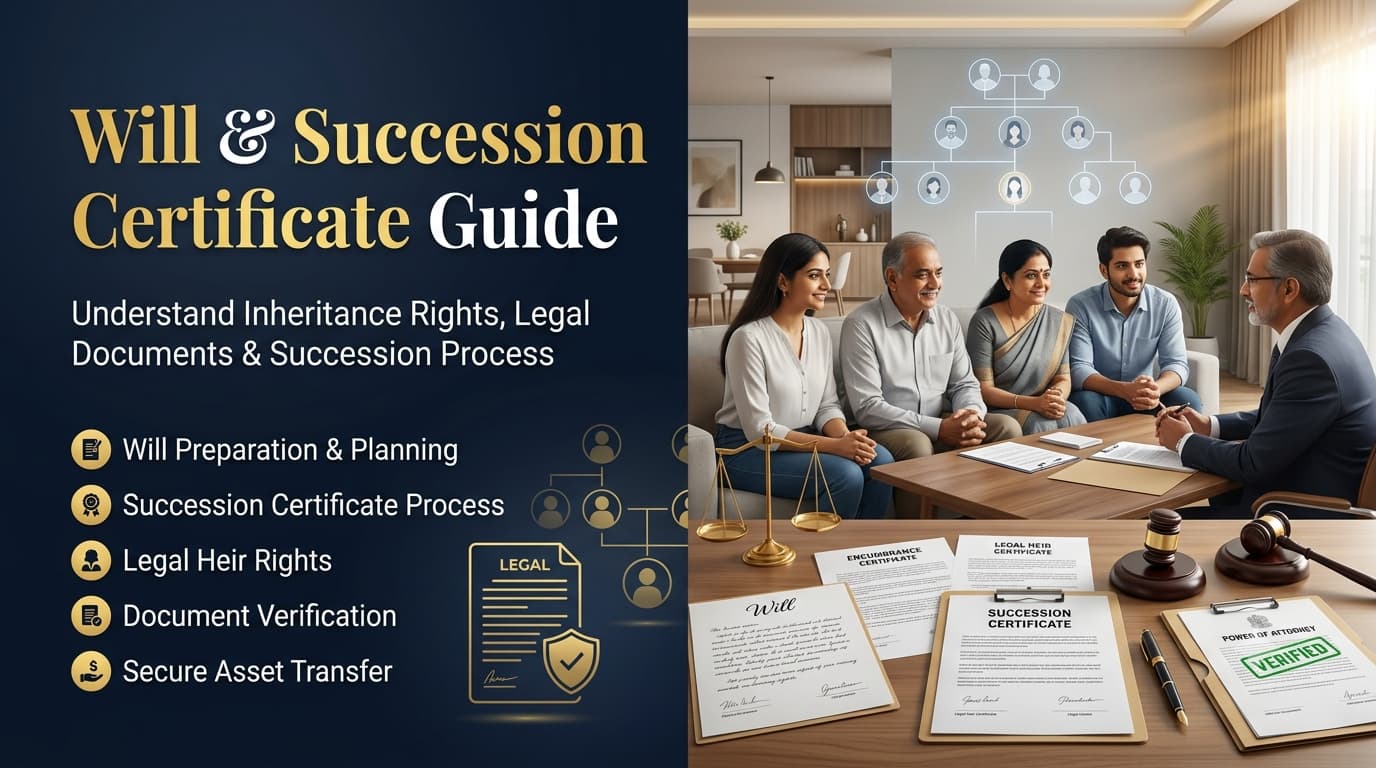
Will & Succession Certificate Guide
Will and Succession Certificate Guide assists individuals to plan how they can manage their property and responsibilities after death without causing any confusion among their relatives. While many people tend to delay their succession planning because they feel that the matter can always be sorted out later on, procrastinating such decisions makes it unnecessarily difficult for the relatives to solve the issues that arise. Making all the necessary legal papers in advance will clarify your wishes and will ensure compliance with the law. Moreover, it will help family members to understand their rights in the absence of a clearly stated record of your wishes.
It is important not only to distribute your property but also to protect the interest of your relatives in the period of mourning. Having all the necessary documents, including the Will, which should be completed by a legal advisor, and knowing the conditions under which a Succession Certificate should be issued will make the process much easier. The guide introduces both documents and explains their features and functions in easy language.
What Is a Will and Why Is It Important
A Will and Succession Certificate is a legal document wherein the person makes it very clear how his assets, properties, and interests must be shared after his life. The document also allows the person to nominate an executor who is responsible for fulfilling the instructions laid out in the document. By making a Will, the author of the document can have complete control over the distribution of his property. The fact that every individual has different personal and family circumstances makes it necessary for him to make a well-drafted Will so that his wishes can be recorded clearly.
In addition to being able to distribute his assets effectively, making a Will also makes it easy to avoid any ambiguity or dispute among his legal heirs. It is less likely for the family members to quarrel regarding what he wanted because all his wishes are written clearly in the Will. Making sure that the Will is updated on regular basis according to the changes taking place within the family or the property of the individual is equally important.
What Is a Succession Certificate
Succession Certificate is the name of an official document issued by the appropriate court to grant authority to the heirs to settle some debts and securities belonging to the deceased person. The main difference between a Will and a Succession Certificate is that the former contains the wishes of the individual while the latter gives legal power to the heir concerning certain financial assets in cases when it is required. Organizations like banks and other financial institutions can demand this certificate before granting access to the relevant accounts or investments to the appropriate heir.
It should be noted that a Succession Certificate cannot take the place of a Will. In addition, this certificate does not give an opportunity to become the owner of all kinds of assets. This document has its own legal aim – to prove the fact of succession of certain movable financial assets in cases when it is required. If this certificate is needed or not depends on the type of the assets in question.
Key Differences Between a Will and a Succession Certificate
While these two types of documents are associated with issues related to inheritance and succession, each serves its own purpose under different circumstances. In particular, Will is made by a person during his life to show the way his property should be distributed after his death. This is a document which reflects the will of its author and is meant to give some directions to his relatives or lawyers on the distribution of his assets. Unlike that, the Succession Certificate is an official document provided by a court to prove the right of legal heirs to manage specific financial assets of a deceased person.
The knowledge of the differences between these two documents makes it easier for people to select the proper procedure instead of thinking that one of the documents is a substitute for another one. While Will may ease the process of succession because it states the intention of a person, Succession Certificate may still be needed due to the necessity to have some formal documents to prove your right in some cases.
When Is a Succession Certificate Required
The Succession Certificate is normally required when the legal heirs require official authorization for the purpose of claiming movable property which remains behind when an individual dies. Movable property includes various kinds of financial instruments, deposits, securities and other transferrable property wherein organizations require legal evidence before allowing access to it or transferring it. The purpose of the certificate is to provide assurance to the organization that the individual who approaches them has the right to manage and take possession of the movable assets. The certificate also ensures that no one else comes later to contest it and make claims regarding the transfer process.
The requirement for the certificate normally varies in accordance with the case and the kind of documents in possession of the family. In some cases, if there is a valid Will and other documents which help in making the process easier. However, in some cases, the requirement of Succession Certificate arises through the process of law. It is therefore necessary that families review the situation and know the process.
Documents Required for Succession Certificate
Application of Succession Certificate involves several documents that can help to prove the connection between the applicant and the dead individual. Such documents include the death certificate, identification proof, details of legal heirs, information regarding the property involved and others that are required throughout the legal process. It is essential to note that documentation of the records is crucial since inaccurate information may lead to delays in processing the application process. Preparation of all documents required may help to ease the process of the application.
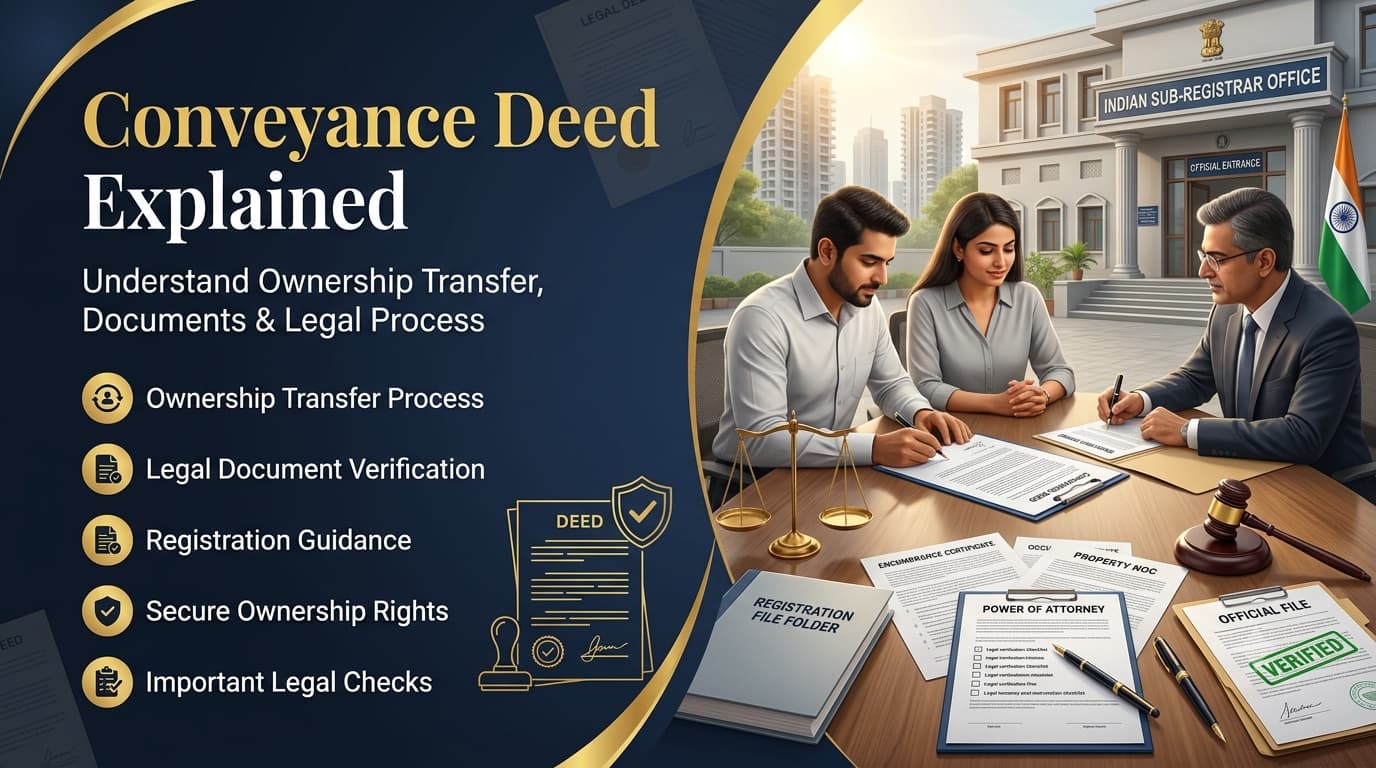
Besides, there are other legal documents that families need to check when dealing with the inherited properties. In this regard, if the inherited property includes immovable property, it is important to check the ownership details of such assets before doing anything. Using the Encumbrance Certificate Guide may enable individuals to get knowledge on how to check if the property has any legal issues. Moreover, using the Property NOC Guide may give one the information of other permissions that may be needed in the future.
Common Mistakes to Avoid During Succession Planning
A lot of families procrastinate succession planning due to the feeling that it is not necessary or simply too complicated to talk about; however, such behavior may bring many problems in the future. The first mistake that many people make is not preparing a Will even if they have substantial property, responsibilities or dependants. The other one is to prepare a document, but it does not include information about beneficiaries or specific instructions; therefore, it may be confusing for the legal heirs. Sometimes people forget to revise their Will after certain significant events take place.
It is crucial to avoid making your succession documents unavailable for your family members or not informing them about their presence. Even if you prepare your Will correctly, it will still cause some trouble if your family will not be able to find it when it is necessary. It is always better to make sure that there is no contradiction between different legal documents and ownership papers.
Can a Power of Attorney Replace a Will
A Power of Attorney and a Will have absolutely different functions and thus cannot substitute one another. Power of Attorney implies that a person allows another person to conduct some affairs on his/her behalf within his/her lifetime for those issues that are stated in this document. It is widely used when there is a need to carry out some actions when a person is not able to do so by himself/herself due to various reasons like distance, health, and others. However, a Power of Attorney usually has its term according to certain legal criteria and thus does not work as a document for the distribution of assets after the death of a person.
A Will appears after a person’s death and expresses wishes about asset distribution and succession. Mixing up these two documents may lead to misunderstanding of the situation by relatives and attorneys of a person. If a person wants to grant some authority during his/her lifetime, he/she should know all the details concerning this issue. A guide on Power of Attorney for Property gives detailed information about this issue.
Documents to Verify Before Transferring Inherited Property
Prior to transferring the inherited asset, it is important for legal heirs to conduct the verification process regarding ownership, documentation, approvals, and any legal liabilities linked to the property. This ensures the accuracy of the documentation and no outstanding liability affecting any of the future ownership rights of the property. While many people will only be concerned with the documentation for inheritance, other documentation related to the legal and historical status of the property will also need to be looked at.
Ownership documentation, Encumbrance Certificate, permission and completion related approvals can become very important depending on the nature of the asset or transaction you wish to conduct. The Occupancy Certificate Guide helps readers get an understanding of the importance of the completion approvals documentation whereas the Encumbrance Certificate Guide highlights the significance of conducting checks related to existing claims or liabilities. In addition, it will also help to know the requirements from the Property NOC Guide, which will inform heirs in situations requiring additional permission before conducting some process. complications.
Frequently Asked Questions
What is the difference between a Will and a Succession Certificate?
A Will records a person’s wishes regarding distribution of assets after their lifetime, while a Succession Certificate is issued by a court to provide legal authority to heirs for dealing with certain assets where proof of succession is required.
Is a Will mandatory for transferring inherited assets?
A Will is not mandatory in every situation, but having one can make the succession process clearer and reduce the chances of disputes among family members.
Can a Succession Certificate replace a Will?
No, a Succession Certificate cannot replace a Will. Both documents serve different purposes and may be required in different situations depending on the nature of assets and legal requirements.
Who can apply for a Succession Certificate?
A legal heir or eligible person entitled to claim the deceased person’s assets can generally apply for a Succession Certificate by following the applicable legal process.
Can a Will be changed after it is created?
Yes, a person can update or modify their Will during their lifetime if their circumstances, decisions, or asset details change.
What documents are needed for succession-related procedures?
Documents may include the death certificate, identity proof, relationship proof, details of legal heirs, and information related to the assets involved.
Does a Power of Attorney continue after the person’s death?
Generally, a Power of Attorney does not continue after the death of the person who granted the authority because it is meant to operate during their lifetime.
Why should inherited assets be legally verified before transfer?
Verification helps confirm ownership details, identify possible legal issues, and ensure that the transfer process is completed without future complications.
Is a registered Will better than an unregistered Will?
A registered Will may provide additional evidentiary value, but the validity of a Will depends on compliance with applicable legal requirements and proper execution.
What happens if there is no Will after a person’s death?
If there is no Will, the distribution of assets generally follows applicable succession laws, and legal heirs may need to complete the required legal procedures.
Conclusion
A Will and a Succession Certificate are some key legal instruments which make it easier for families to deal with issues related to inheritance. Whereas the former gives one an opportunity to outline his/her preferences in relation to the asset division, the latter grants legal power to the heirs when there is a need to prove something. Knowing the distinction between the two papers and being able to prepare proper documents will facilitate the succession procedure.
Planning your succession should be seen as an act of responsibility as it will secure the interests of your family in the future. In case you wish to find out more about legal documentation, ownership procedures and all other relevant compliance issues, visit Sapient Realty.