Dakhil Kharij Haryana
If your name has not been updated in the local records after the process of transfer, family change, court order, donation, and succession cases, then the process that follows is dakhil kharij haryana. For candidates from Haryana, the localities are very important. Therefore, be ready with your district, tehsil, village, and PIN code before you start. Some common PIN codes that are referred to by individuals when filling address details include Faridabad 121001, Gurugram 122001, Rohtak 124001, Hisar 125001, Karnal 132001, Ambala 133001, Panipat 132103, Sonipat 131001, Rewari 123401, and Panchkula 134109. You will wonder how a small error like a PIN code can affect your process. However, yes, it will take time.
The procedure is very difficult for most people to understand due to the involvement of various offices, forms, receipt details, and record language. While one individual might direct you to proceed to the tehsil, another may advise you to first confirm whether the information is available online. While another may ask you to present a copy of your previous document, somewhere in between, the applicant ends up being confused about what to do.
This guide sticks to simplicity by offering you an explanation of the meaning of the process, the circumstances under which you would require it, the documents that must be prepared for it, the application process, checking on its status, and avoiding common pitfalls. We do not aim to bombard you with complicated bureaucratic language.
We have noticed that some problems experienced by our clients arise not because the process is extremely difficult but because of an omission of just one small factor. At times, there is inconsistency in name spellings. Other times, the wrong record number is entered. Yet other times, there may be a problem with the supporting document.
Why This Process Matters for You
An update to a record appears to be a mundane activity, but its importance is realized when the individual’s name needs to be included correctly in the government’s record.
The most pressing problem is that people think one document is all that is required. The fact is that one process could lead to completing a transaction or transferring a record, whereas the other is an update to the revenue record. Here enters Dakhil Kharij.It helps you:
- Get the correct name updated in local revenue records
- Reduce future disputes within the family or between parties
- Keep government entries aligned with the latest documents
- Make future verification smoother
- Avoid repeated visits due to incomplete record details
It will be wise to undertake this task immediately instead of waiting until there is trouble later on. A pending item might not be bothering you right now, but you will definitely get anxious when you require urgent verification or certification.
Meaning of Dakhil Kharij in Simple Words
Dakhil Kharij is a process that involves recording the new name and deleting or replacing the old name in the government revenue records on account of the occurrence of a legitimate transfer. In Haryana, the mutation is also known by another name called intkal.
This process will not take away your primary legal document. Instead, it will ensure that you update the government revenue record so that the new name shows up in the record. This may include any legitimate transfer of ownership such as sale, inheritance, gift, division, or even court decree in respect of a particular piece of land.
A simple way to understand it is this:
| Term | Simple Meaning |
| Registry | Main registered document showing transfer |
| Mutation or Intkal | Name update in revenue record |
| Jamabandi | Periodic record of rights and cultivation details |
| Khasra | Survey number linked with a specific parcel |
| Khewat | Account number connected with holders |
| Nakal | Certified copy of a record |
So, mutation helps bring the revenue record in line with the actual change.
When You Need Mutation in Haryana
You may need mutation when there is a change in the person whose name should appear in the revenue entry. This can happen in many situations.
Common cases include:
- Purchase through registered sale deed
- Transfer through gift deed
- Inheritance after death of a family member
- Family partition
- Court decree
- Will-based transfer
- Exchange between parties
- Correction after an old entry mistake
- Transfer after government order or authority decision
But many people avoid doing this step because they feel that having the registered copy is sufficient for them. While the registered copy is highly essential, there has to be a corresponding change in the revenue record. Otherwise, you will have to keep explaining your position time and again.
Who Can Apply for Mutation
The person who has a valid interest in the transfer can usually apply. In simple terms, the applicant should have a proper reason and supporting papers.
Usually, the following people can apply:
- Buyer after registered sale deed
- Legal heir after death of the recorded person
- Person receiving through gift deed
- Family member after partition
- Person named in a court order
- Authorized representative with valid authority
- Co-sharer whose share has changed
If you are applying on behalf of someone else, keep authorization papers ready. Do not assume verbal permission will work. Revenue offices generally ask for written proof.
Documents You Should Keep Ready
Before submitting a dakhil kharij application, arrange your documents properly. This saves time and reduces repeat visits.
Here is a practical checklist:
| Situation | Documents Usually Needed | Helpful Tip |
| Sale transfer | Registered sale deed, ID proof, address details, record details | Match names exactly with the deed |
| Inheritance | Death certificate, family certificate or legal heir proof, ID proof | Keep all heir details clear |
| Gift transfer | Registered gift deed, ID proof, record details | Check donor and receiver names carefully |
| Partition | Partition deed or order, family details, record copy | Mention shares clearly |
| Court order | Certified copy of court order, ID proof, record details | Use the exact order details |
| Correction case | Proof of correct name or detail, old record copy | Explain the error clearly |
You may also need:
- Aadhaar or other identity proof
- Address proof
- Passport size photo, if asked
- Jamabandi copy
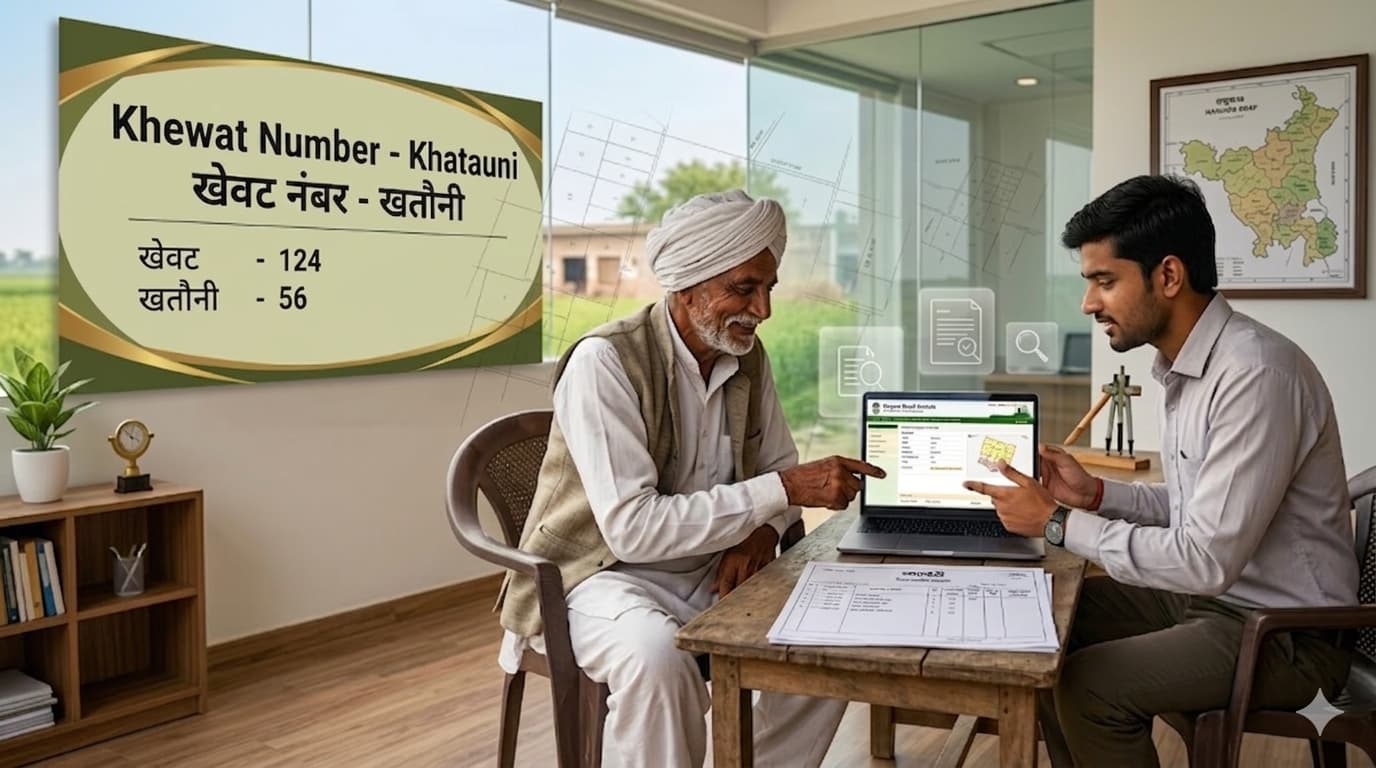
- Khasra or khewat details
- Registry number and date, if applicable
- Mobile number for updates
- Application receipt after submission
A small spelling difference can create delay. For example, “Raj Kumar” and “Rajkumar” may look similar to you, but records may treat them differently. So check each document before submitting.
How to Apply Online
Nowadays, many customers prefer to use the online approach since it helps save their time at the very first step. Using the online service, a customer may send his information, monitor its status, and even monitor other related forms. In case of the online land namjari registration, be sure that you have all necessary details at hand before accessing the portal. Avoid starting the form hastily.
A simple online flow usually looks like this:
- Open the Haryana revenue or Jamabandi related service portal
- Choose the mutation or intkal related service
- Register or log in, if required
- Select district, tehsil, village, and related record details
- Enter applicant details carefully
- Fill transfer details based on your document
- Upload required papers in clear format
- Review all entries before final submission
- Submit the request
- Save the acknowledgement or application number
After submission, do not just leave it. Track the status from time to time. If any objection, notice, or verification step appears, respond quickly.
Offline Process Through Tehsil or Revenue Office
Some people still prefer the offline process, especially when the case involves inheritance, family dispute, old record mismatch, or correction. That is completely fine.
The offline route usually works like this:
- Visit the concerned tehsil or revenue office
- Share your village and record details
- Ask for the required form or submission process
- Attach copies of supporting documents
- Submit the form at the right counter
- Collect the receipt or acknowledgement
- Stay available for verification
- Check whether the entry is approved or pending
You might even have to cooperate with the patwari, who is an official from the revenue office for checking records. Be courteous, have photocopies at hand, and always bring in originals. A very practical point to remember is that never send your only copy of any document without being asked.
How to Check Mutation Status
Once you submit the request, the next smart step is tracking. Many people apply and then forget to check the status. Later, they find out that the file was pending due to objection or missing detail.
You can generally check status using details such as:
- District
- Tehsil
- Village
- Registry number
- Registry date
- Mutation number, if available
- Applicant name
- Khewat or khasra details
In case the status says pending, don’t panic. It could simply indicate that the verification process is yet to be completed. In case the status says objected, then ensure you check out why it is so and provide the necessary corrections. We recommend all users to maintain a small portfolio containing all receipts and copies of records.
How to Raise an Objection
Sometimes a wrong entry may appear, or someone may try to get a change done without including all concerned persons. In such cases, an objection can be raised.
You may consider raising an objection when:
- Your name or share is missing
- A wrong person’s name is entered
- The document details are incorrect
- The transfer is disputed
- All legal heirs were not included
- The khasra or khewat detail is wrong
- The entry does not match the actual document
While raising an objection, avoid emotional statements. Write the facts clearly. Attach proof. Mention the exact entry you are objecting to. If the issue is serious, take legal advice before submitting anything.
Timeline and Verification
The time taken can vary from case to case. A simple case with clear documents may move faster. A case involving family members, objections, old records, missing papers, or court documents may take longer.
Verification usually checks:
- Whether the document is valid
- Whether the applicant details match
- Whether the record numbers are correct
- Whether any objection is pending
- Whether all required people are included
- Whether the transfer reason is clear
The best thing you can do is submit a clean file from the start. That means correct spelling, correct village details, clear document copies, and matching ID proof.
Common Mistakes You Should Avoid
Most delays happen due to simple mistakes. You can avoid them with a little care.
Avoid these common errors:
- Entering the wrong tehsil or village
- Using a different name spelling in different documents
- Uploading blurred document copies
- Missing death certificate in inheritance cases
- Not including all legal heirs
- Forgetting to save acknowledgement number
- Assuming submission means approval
- Ignoring status updates
- Not correcting old record mismatch
- Submitting without checking khasra or khewat details
A calm review before submission can save multiple visits later. Read every entry twice. Ask a trusted person to check the details once more, specially if the document has many numbers.
Difference Between Registry, Jamabandi, Mutation and Intkal
These terms often confuse users. Here is the simplest way to understand them.
| Term | What It Means | Why It Matters |
| Registry | Registered transfer document | Shows the legal transfer record |
| Mutation | Revenue record update after transfer | Helps update the name in local records |
| Intkal | Another common word for mutation | Used often in Haryana revenue work |
| Jamabandi | Periodic record showing rights and entries | Used for checking existing details |
| Nakal | Certified copy of a record | Used as proof for checking entries |
| Khasra | Field or survey number | Helps identify the exact parcel |
| Khewat | Account number of holders | Helps trace record holders |
Understanding these words helps you talk clearly at the office and fill forms with fewer mistakes.
Is Mutation Proof of Ownership
Mutation is an essential step in this procedure, but mutation must not be mistaken for the document referred to above. Mutation will change the revenue record, whereas your actual rights rest on the document(s) you hold, your will, court order, or any other legal document. Hence, it is important that you do not lose your original documents.
You should maintain:
- Registered deed or transfer paper
- Mutation order or approval proof
- Bhulekh Haryana / Jamabandi copy after update
- ID proof copies
- Family or heir documents, if applicable
- Court order copy, if applicable
- Application receipt
This complete set protects you better during future checks.
Practical Tips Before You Submit
Before applying, sit with your documents for a few minutes. It sounds basic, but it works.
Check these points:
- Name spelling is same everywhere
- Father’s or spouse’s name is correct
- District, tehsil, and village are correct
- Khasra and khewat numbers match
- Registry number and date are correct
- All pages are readable
- Mobile number is active
- Address and PIN code are correct
- All required persons are included
If you feel confused, do not guess. A wrong guess can create a bigger correction task later.
Suggested On-Page SEO Placement
For a website article, you can support this topic with simple internal and external link placements, without overdoing it.
Internal linking suggestions:
- Link to a guide on Haryana Jamabandi
- Link to a guide on checking mutation status
- Link to a guide on sale deed documents
- Link to a guide on legal heir documentation
- Link to a guide on khasra and khewat meaning
External linking suggestion:
- Add one official Haryana revenue service reference for users who want to apply or check status
Use these links naturally inside the article body, not in every paragraph. Too many links make the content look forced.
Conclusion
The procedure for Dakhil Kharij appears complicated at first, but it will be easy once you learn the right process. You just have to go through the right verification of your documents, name matching, choice of either online or offline processing, submitting your application, and regular monitoring of the status. All that matters is that you should not postpone the updating of your record in case of a valid transfer or change in family details. An updated record will prevent many problems in the future. In case you are getting ready to prepare your paperwork, make sure to list all the things you need to do, get your documents in order, write down your district, tehsil, village, and PIN code.
FAQs
What is the meaning of mutation in Haryana revenue records?
Mutation means updating the revenue record after a valid change. It helps show the latest name in the official entry connected with the concerned land record.
How can I submit a dakhil kharij application in Haryana?
You can submit a dakhil kharij application through the online service route or by visiting the concerned tehsil or revenue office. Keep your identity proof, transfer document, record details, and acknowledgement safely.
Can I complete land namjari online in Haryana?
Yes, land namjari online can be started through the relevant Haryana revenue service platform, depending on the case type and available service option. Make sure your documents are clear before submission.
Which documents are required for mutation after inheritance?
You may need a death certificate, family certificate or legal heir proof, identity proof, record details, and supporting papers showing your claim. In some cases, extra verification may be required.
How do I check mutation status after applying?
You can check status using details such as district, tehsil, village, registry number, registry date, mutation number, or record details. Keep your acknowledgement number ready for easier tracking.
Is registry and mutation the same thing?
No, registry and mutation are different. Registry records the transfer document, while mutation updates the revenue entry after that transfer.
What happens if my mutation request is rejected?
If rejected, read the reason carefully. It may be due to missing documents, wrong details, objection, mismatch in names, or unclear transfer proof. Correct the issue and follow the suggested process.
Can someone object to a mutation entry?
Yes, an objection can be raised if the entry is wrong, disputed, incomplete, or made without including the concerned persons. The objection should include clear facts and supporting proof.
How long does mutation take in Haryana?
The timeline depends on document clarity, verification, objection status, and local processing. Simple files may move faster, while disputed or incomplete files usually take more time.
Why is my name not updated even after submitting the mutation request?
Your name may not update if verification is pending, an objection is raised, documents are incomplete, or record details do not match. Check the status and respond to any pending requirement quickly.