Patwari in Haryana
If you reside in the Haryana region such as Gurugram 122001, Faridabad 121001, Rohtak 124001, Hisar 125001, Karnal 132001, Panipat 132103, Sonipat 131001, Rewari 123401, Ambala 133001, Panchkula 134109, or neighboring villages, you must have come across individuals stating that “Check the record by Patwari” or “Firstly Check the Jamabandi and Khasra number” While these terms seem familiar, they are not quite comprehensible. The situation becomes even more complicated when there is a disparity between papers, names, mutation is in process, and the precise location mentioned in documents seems incorrect in practice.
A Patwari is the initial name that most individuals encounter when handling documentation at the village level in Haryana. The question is straightforward. Few individuals understand what assistance a Patwari can provide, what services the Patwari does not offer, and when they need to approach other officials like Tehsildar, Kanungo, registry, legal advisor, or other government departments. Therefore, people tend to lose valuable time, trust misleading guidance, and proceed without validating critical facts.
The following guide has been written in your perspective. It is not a government booklet filled with tough terms and technical language. Rather it is a practical and concise guide that will help you understand the importance and purpose of Patwari during Jamabandi, Khasra number, Mutation, Intkal, Demarcation and Record Correction.
It is a very common occurrence for people to visit Sapient Realty due to small but important confusions that have come up. There might be differences in the name of the seller, confusion regarding Khasra number, the name of the previous owner showing up, unclear details about family share and many such other issues where the record is available online but is difficult to understand.
Quick Meaning of Patwari in Haryana
Patwari can be defined as an office under the local record keeping that deals with villages. Simply put, Patwari assists in keeping and providing details related to village records, ownerships, Khasras, crops/possessions, mutation reporting, and ground level information.
However, in cases where individuals search for Patwari in Haryana property issues, their question revolves around one aspect: “Is it possible for Patwari to assist me in confirming the correctness of my documents?” The answer is Yes; however, this does not mean that Patwari information can always solve everything for you.
Patwari can assist in providing record level information; however, issues related to approval/sanctioning/registration/dispute resolution/matters of ownership will most often need higher revenue officer’s or court’s assistance.
Why Patwari Matters in Haryana Property Work
For an ordinary individual, the Patwari is important because most problems arise out of local documents. Even a small misspelling, inaccurate share, old record, pending mutation, or incorrect Khasra entry can lead to serious problems in the future. The services of the Patwari become necessary for people who are facing:
- Jamabandi record
- Khasra number
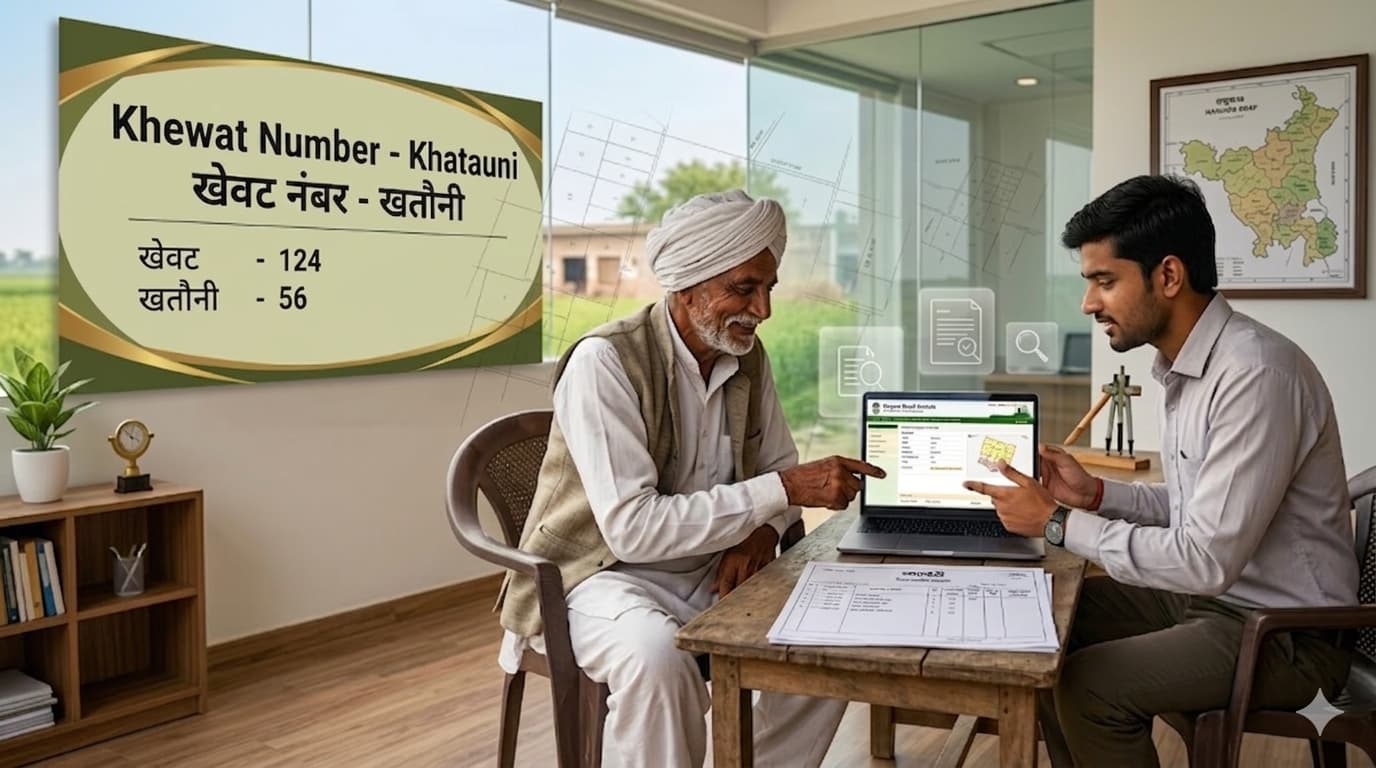
- Khewat number
- Khatauni details
- Mutation or Intkal
- Demarcation or Nishandehi
- Name correction
- Inheritance record
- Share in joint holding
- Physical possession confusion
- Field-level report
The main benefit of understanding the Patwari’s role is that you do not depend only on verbal promises. You know which record to check, what question to ask, and where to go next.
Role of Patwari in Jamabandi Haryana
Jamabandi is one of the important records of Haryana. It generally contains information regarding the name of owner, Khewat, Khatauni, Khasra number, area, share and entries relating to cultivation or possession etc., along with other revenue information. Lots of people download or gather information about Jamabandi, but they lack its understanding. This is the point from which confusion arises, which is why the role of a Patwari comes into play since:
- Whether the name in Jamabandi matches the person dealing with you
- Whether the Khasra number is correct
- Whether the land share is full or partial
- Whether the record has old entries
- Whether mutation is pending or already entered
- Whether there is some mismatch that needs correction
Here is a simple point to remember. Jamabandi is not just a paper to keep in a file. It is a record you should read carefully before making any major decision.
Role of Patwari in Khasra Number Verification
The khasra number can be described as the identification number associated with a particular plot of land within the revenue record of that village. It becomes highly difficult for a person to get their work done when the Khasra number is wrong. This is among the biggest issues faced by the users. One may present a certain area to you, but there may be confusion because of a wrong Khasra number. The land can be held jointly in some cases.
Before trusting any deal or document, you should check:
- Khasra number
- Village name
- Tehsil and district
- Khewat number
- Khatauni number
- Total area
- Seller’s share
- Mutation history
- Actual possession
- Boundary details
A Patwari may help you understand field-level details linked with the Khasra number. Still, for final decisions, do not depend on only one person’s words. Match the online record, physical location, and documents together.
Role of Patwari in Mutation or Intkal
Mutation, referred to as ‘Intkal’ in several places, is the process wherein the records are updated following a change in the ownership of the land owing to sale, gift, inheritance, partition, court order, etc. It is during this stage that most individuals face problems. They assume that since the registration is already done, all is well and good. However, they come to realize that their previous name still appears in Jamabandi.
A basic mutation flow usually looks like this:
- Transfer document or valid reason is created
- Mutation request is initiated
- Existing record is checked
- Revenue-level reporting may happen
- Objections, if any, are reviewed
- Competent authority sanctions or rejects the mutation
- Updated details reflect in future records
The Patwari may be involved in reporting or record-level checking, but mutation is not something the Patwari alone “approves” independently. This is an important thing to understand.
Registry and Mutation Are Not the Same
It is an extremely prevalent error. The registry takes care of recording the transaction. The mutation, on the other hand, makes changes to the revenue record. Hence, after the process of registry, it would be wise to make sure that mutation is also done or not. It must be followed through since otherwise, it could create troubles in the future.
Role of Patwari in Land Demarcation
Land demarcation is commonly called Nishandehi. It helps identify actual boundaries on the ground.
This becomes very important when:
- Boundary is not clear
- There is a dispute with another person
- Area on paper and actual use look different
- Family land is being divided
- Construction or fencing is planned
- Khasra location is confusing
- Someone claims possession over part of the land
Information regarding patwari can be used in this regard too. Nevertheless, the demarcation normally takes place through a proper revenue process. In case you want to buy, sell, partition or protect your land, do not avoid the process of demarcation when the boundaries are not clear. A golden guideline for this purpose is that the two sides are paper and ground. Both must be checked.
Patwari, Kanungo and Tehsildar Difference
Many people get confused between Patwari, Kanungo and Tehsildar. The confusion is normal. Their work is connected, but their roles are not the same.
| Official | Simple Role |
| Patwari | Works at village or local revenue level and handles field-level record information |
| Kanungo | Supervises Patwari-level work and checks revenue records in a wider area |
| Tehsildar or Naib Tehsildar | Handles higher-level revenue work, approvals, mutation matters, and administrative decisions |
| Registrar or Sub-Registrar | Handles registration of documents like sale deed and transfer documents |
The simple way to understand it is this: Patwari is closer to village-level records, Kanungo supervises, Tehsildar handles higher revenue matters, and registration office handles document registration.
When You May Need Patwari-Related Help
You may need Patwari-related help when you are facing any of these situations:
- You want to check Jamabandi
- You want to understand Khasra number
- You need mutation or Intkal update
- Your name is not showing after transfer
- Old owner name is still visible
- There is a mistake in name or share
- You want to check inherited record
- The land is joint and shares are confusing
- You want demarcation
- There is boundary confusion
- You want to verify possession
- The record shown online does not match what someone told you
This does not mean every small thing requires a visit. Many records can be checked online first. But when confusion remains, local-level record understanding can help.
Documents You Should Keep Ready
Keeping documents ready saves time. It also helps you ask better questions instead of going again and again.
You may need:
- Jamabandi copy
- Khasra number
- Khewat number
- Khatauni details
- Registry or sale deed copy
- Mutation number, if available
- Aadhaar or ID proof
- Family tree in inheritance cases
- Death certificate in inheritance cases
- Court order, if any
- Old record copy
- Village, tehsil and district details
Do not carry random papers only. Keep them in order. If possible, note down your exact question before visiting any office. Sounds small, but it helps a lot.
Buyer Checklist Before Final Decision
Before making a serious decision, check the record properly. Many people hurry because they trust the seller, relative, dealer, or village contact. Later, the same hurry becomes a headache.
Use this simple checklist:
- Check latest Jamabandi
- Match seller name with the record
- Check Khasra number
- Check Khewat and Khatauni
- Confirm seller’s share
- Check whether land is joint
- Check mutation history
- Check pending mutation
- Match paper details with actual location
- Check possession
- Check boundary
- Ask about disputes
- Check if any loan, charge, or restriction exists
- Take expert help in high-risk cases
Do not feel shy asking for records. A genuine person should not object to proper verification.
Common Problems and Practical Solutions
Many users face the same problems again and again. Here are some common issues and what you should do.
| Problem | Practical Step |
| Seller name does not match Jamabandi | Check mutation status and ask for updated record |
| Old owner name is still showing | Verify whether mutation is pending or rejected |
| Khasra number is confusing | Match Khasra with village map and field-level details |
| Seller owns only partial share | Check Khewat, Khatauni and total share carefully |
| Name spelling is wrong | Follow correction process with proper documents |
| Inheritance record is not updated | Keep family tree, death certificate and supporting papers ready |
| Boundary is unclear | Apply through proper demarcation process |
| Record shown online looks different | Compare latest copy and confirm from relevant revenue office |
The solution is not always instant. But the right first step is to identify the exact mismatch.
Mistakes You Should Avoid
A lot of trouble can be avoided if you do not make these mistakes:
- Do not rely only on verbal promises
- Do not skip Jamabandi checking
- Do not ignore mutation after registry
- Do not assume full ownership without checking share
- Do not trust old photocopies blindly
- Do not ignore Khasra mismatch
- Do not skip boundary verification
- Do not buy joint land without understanding shares
- Do not ignore family dispute signs
- Do not avoid legal advice in complicated matters
One small correction before the final step can save months of stress later. Really, this happens often.
Online Haryana Land Record Checking
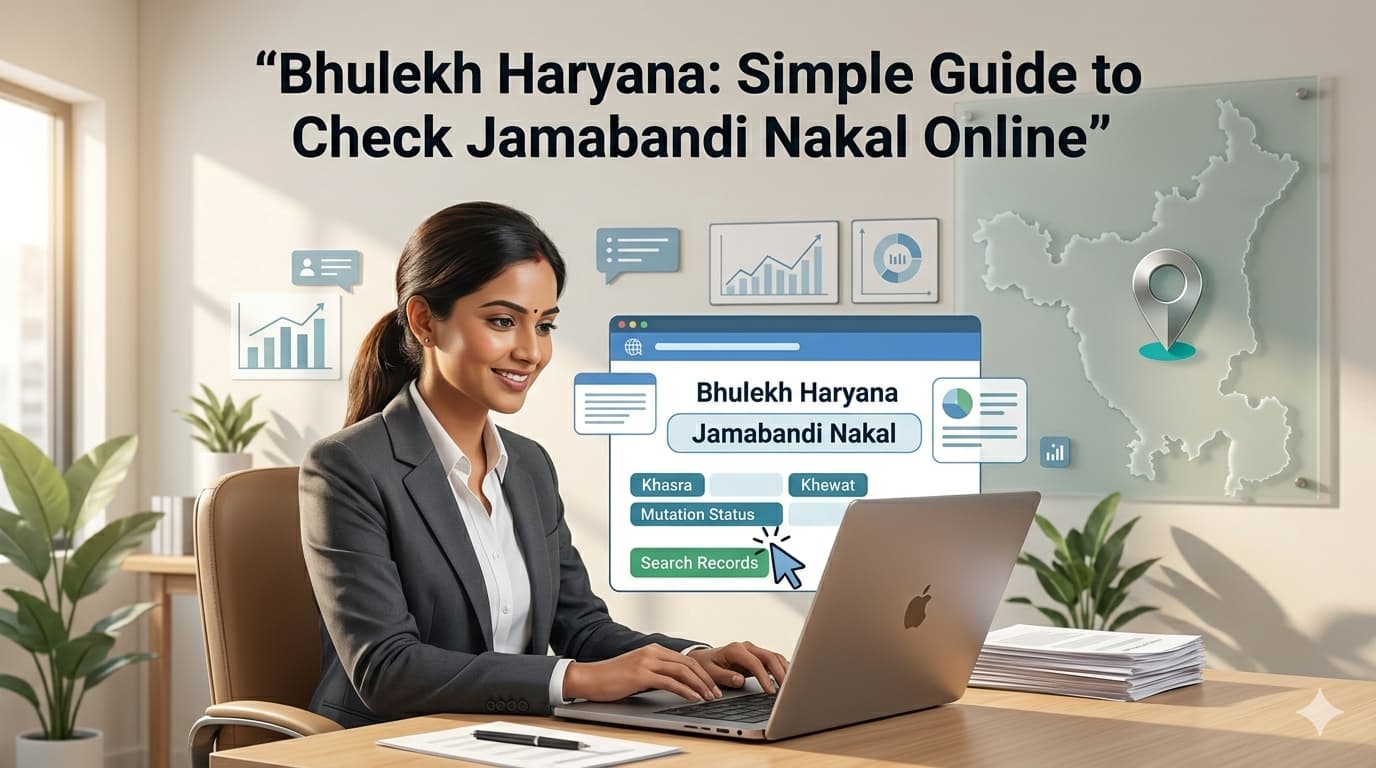
Land records in Haryana can be verified via digital platforms officially provided by the government. Individuals typically look for terms such as Jamabandi Haryana, Jamabandi Nakal Haryana, Bhulekh Haryana, Khasra Number Haryana, and Online Mutation Haryana as they need fast access to information. Online checking is useful because it helps you:
- View record details before visiting an office
- Check owner name
- Search by Khewat or Khasra
- Review mutation-related information
- Download or view Jamabandi details
- Compare paper copies with online records
Still, online record checking is only one part of the process. If the matter is serious, disputed, high-value, inherited, joint, or unclear, you should verify the details from the correct office and take professional advice.
How Sapient Realty Suggests You Approach This
A smart way to do things is not difficult to understand. Begin by doing an online search, then document verification, then on-ground confirmation, and finally seek expert assistance if you find any ambiguity.
Begin with checking Jamabandi. Proceed to matching of the Khasra number. Next, cross-check Khewat and Khatauni records. Finally, verify mutation record. Afterwards, examine documentation with an expert in the field if needed.
Conclusion
Knowing the importance of the Patwari in Haryana will prevent you from getting confused, making errors, being late in doing the mutation, having problems with Khasra, and worrying about boundaries. The Patwari is crucial in recording information at the village level; however, all the decisions are not made by him. This is why you need to ensure the information on the Jamabandi, Khasra, Khewat, Khatauni, mutation, possession, and boundary are all correct before proceeding further. In case of simple transactions, it may be sufficient to start with an online search of the records.
FAQs
What is the role of Patwari in Haryana property records?
A Patwari is connected with village-level record information, Jamabandi details, Khasra entries, mutation-related reporting, possession details and field-level updates. The Patwari helps with local record understanding, but final approvals may involve higher officials.
Is Patwari required for mutation in Haryana?
Patwari-level reporting or record checking may be involved in mutation matters, but mutation is usually sanctioned by the competent revenue authority. So, Patwari may be part of the process, but not the only authority.
Can Patwari change ownership in Jamabandi Haryana?
A Patwari cannot independently change ownership just by saying so. Ownership record changes must follow the proper legal and revenue process, such as registry, inheritance, gift, partition, court order or sanctioned mutation.
What is the difference between Patwari and Tehsildar in Haryana?
A Patwari works at the village or local revenue level. A Tehsildar is a higher revenue officer who handles approvals, administrative revenue matters and mutation-related decisions depending on the case.
How does Patwari help in Khasra number verification in Haryana?
A Patwari may help connect the Khasra number with local record and field-level details. This is useful when the location, area, share, or actual possession is unclear.
Why should I check Jamabandi before buying land in Haryana?
Jamabandi helps you verify owner name, Khasra number, Khewat, Khatauni, area, share and record entries. Checking it before making a decision reduces the risk of mismatch, dispute or wrong claim.
What should I check if mutation is pending after registry in Haryana?
You should check mutation status, reason for delay, required documents, objection details if any, and whether the case is pending before the proper revenue authority. Do not assume registry alone completes the record update.
What documents are needed for Patwari-related land record work in Haryana?
Common documents include Jamabandi copy, Khasra number, Khewat number, registry copy, mutation number, ID proof, family tree for inheritance cases, death certificate, old record copy and court order if applicable.
Can Patwari help in land demarcation in Haryana?
Patwari-related field information may be useful in demarcation matters, but official demarcation should be done through the proper revenue process. This is important when boundaries or possession are unclear.
How can I avoid mistakes while checking Haryana land records? Check the latest Jamabandi, match Khasra number, confirm seller’s share, review mutation status, verify possession, check boundary, and take expert advice in complicated cases. Do not rely only on verbal assurance.